
Living in the Shade, Finding the Light: A Cutaneous Lupus Journey
Meet Lindsay, our lupus warrior living with cutaneous lupus whose journey from uncertainty and misdiagnosis to self-discovery and resilience highlights the reality of living with an often misunderstood autoimmune disease. Her story is a reminder that cutaneous lupus is more than skin deep.
Can you share a little about when you were first diagnosed with cutaneous lupus (CLE) and what that experience was like for you?
I was diagnosed with cutaneous lupus two years ago after undergoing many doctor’s appointments and testing – finally, the dermatologist completed a biopsy on the rash I had, confirming I had CLE. It was a surreal moment; finding out you have an untreatable illness. But I had the support of my wonderful family and amazing husband (who happens to work in healthcare) to help me. He asked all the questions when my mind went blank. He did the research into my condition when I became overwhelmed with medical jargon. He supported and encouraged my lifestyle change when I became complacent.
What were some of the first symptoms or skin changes you noticed before receiving your diagnosis?
The first symptoms I experienced were mental health-related. I had an overwhelming sense of sadness and dread; I thought I was experiencing a mental break due to stress and burn-out. I couldn’t sleep, became depressed, and developed a relentless whole-body shake (like I was constantly shivering from the cold, even though it was the middle of summer).
Then came the rash. Large red circles appeared on my face and neck, and down my shoulders and arms. The doctors thought I had ring worm, so I was prescribed antifungal creams. When that didn’t work, they prescribed a steroidal cream, which also did nothing, and the rash progressed. Finally, a biopsy was taken from the rash on the back of my neck, and cutaneous lupus was confirmed.
Has living with cutaneous lupus impacted your daily life, or routines?
One of the biggest threats to CLE is the sun. I have never been much for sunbathing (I prefer to enjoy sunny days from the comfort of shade), but I have always loved outdoor activities like softball, volleyball, paddleboarding, golf, etc.
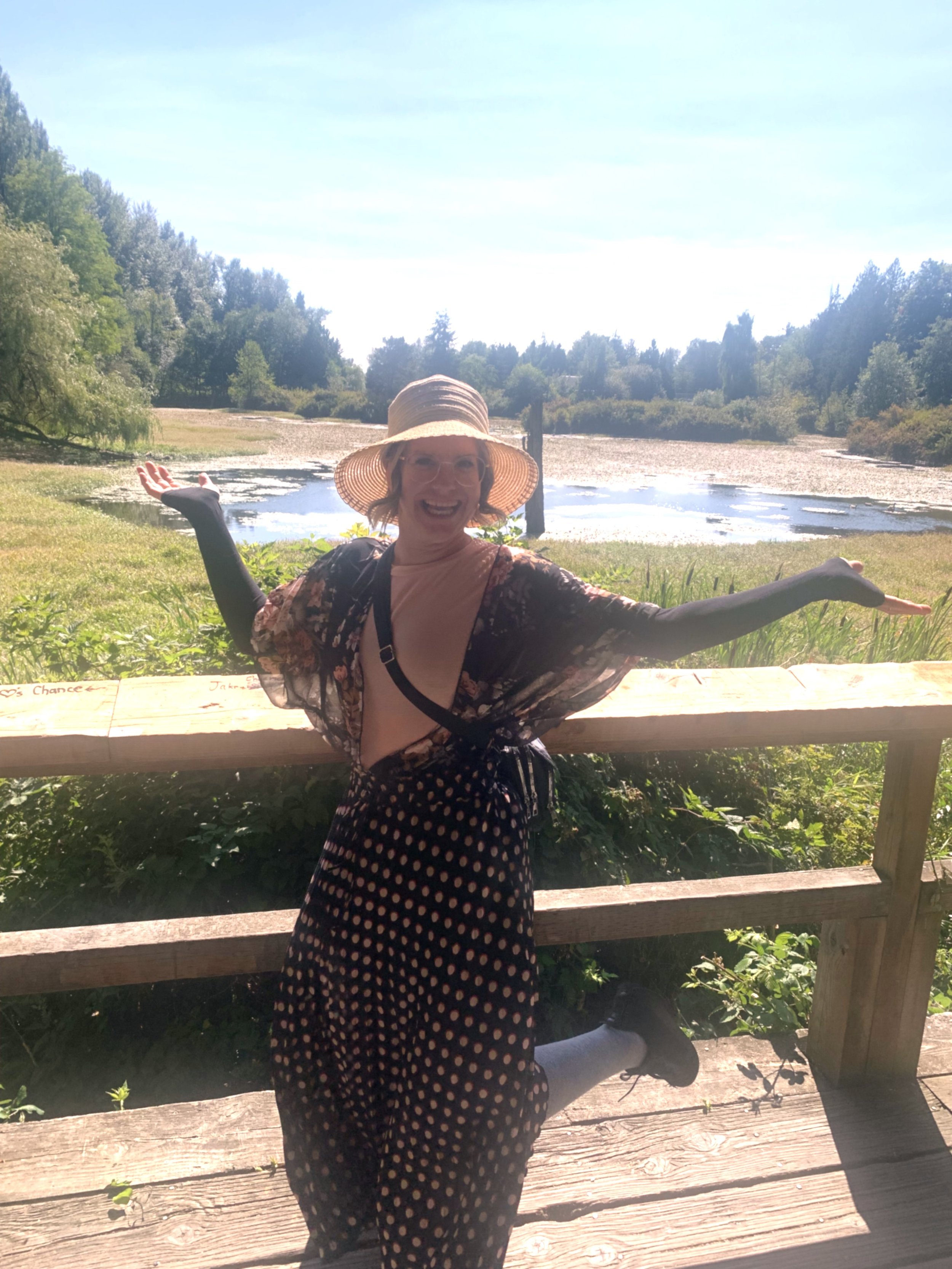
Now, instead of just sun screening up before heading outside, I try to keep my skin completely covered by clothes, even in the heart of summer. I wear long skirts/pants, removeable sleeves, and large hats. On really sunny days I carry an umbrella.
Before being able to enjoy an outdoor activity, I have to be sure that there will be adequate shade, or I bring extra layers. This isn’t always easy for certain activities, like swimming, and it gets very difficult during heat waves to find cooling ways to keep covered up.
Many people are unfamiliar with cutaneous lupus. What do you wish others better understood about the condition?
Just because it isn’t systemic and “only affects my skin”, does not mean it isn’t still serious. When I experience a flare-up, my sleep is affected, my mood diminishes, and I’ll sometimes experience those shakes/shivers again. I am also at a greater risk of the disease progressing to SLE during a flare-up.
Have you found certain triggers that tend to cause flare-ups for you?
Processed meat and refined sugar. I eliminated those items as part of new year cleanse and without realizing it, the rash on my elbows and knees disappeared. I had previously thought the rash was psoriasis. But, when I reintroduced refined sugar and processed meat, the rash returned, this time extremely purple and very painful. The rash was again biopsied and confirmed it was also a lupus rash. Since eliminating those two tings again, the rash subsided.
Unfortunately, the other thing I believe triggers a CLE flare-up is stress. Even more unfortunate, it is extremely difficult to keep a completely stress-free life. Sometimes it doesn’t even have to be negative stress – over-excitement about something can trigger a flare too.
What strategies, treatments, or lifestyle adjustments have helped you manage your symptoms and protect your skin?
Large hats and loose, flowy clothes have been my saving grace! And I always have a little lupus arsenal with me – a small mineral sunscreen, foldable hat, and light shawl to cover my arms. I take vitamin D supplements to help with the lack of sunshine my body gets.
I also have bloodwork and a call with my rheumatologist every 6 six months. They test certain levels in my body to see if I have developed other autoimmune conditions, or if the cutaneous lupus has progressed to systemic lupus. The research I’ve been able to find suggests I have 5-8 years from initial CLE diagnosis to fulfilling the systemic classification.
How has your relationship with self-care or mental health changed since your diagnosis?
At first, it didn’t change. I continued to drink lots of alcohol, didn’t care about my lack of sleep, and just kind of ate whatever I wanted. I think I was mostly in denial that it would affect me or progress to systemic lupus.
But finally, something clicked. I first started focusing on sleep hygiene (your body can’t heal without sleep, right?), which developed into a whole self-care, exercise and healthy eating thing. Thankfully, I have always loved cooking/meal prepping, and generally have lots of energy, so a proper routine of exercise and healthy meals worked in nicely to my daily life.
Sometimes it’s difficult to make myself stick to the routine/self-care plan, but I try to remind myself how good I feel when I complete an exercise class, or how much more my body likes it when I don’t reach for unhealthy foods.
What has been the biggest challenge of living with cutaneous lupus, and what has helped you through it?
The first biggest challenge is limited information. The internet has a lot of opinions, but a lot of misinformation as well. Unfortunately, CLE seems to be a bit of a void when it comes to healthcare professionals. My dermatologist refers me to my rheumatologist for answers, but the rheumatologist refers me back to the dermatologist, because neither of them are quite certain. It would be nice to be able to speak with a specialist who can answer the questions I have.
The second biggest challenge is I miss my beef jerky and sour candies!! But I try to remind myself that the instant gratification of having those treats is not worth the potential long-term effects they may have.
Is there a moment in your lupus journey where you felt especially empowered, hopeful, or supported?
The discovery of what causes (or rather what helps) the flare-ups was a huge win for me. It’s nice to be able to connect with your body in a positive way, and being able to enforce the rules I have set for myself makes me feel strong and in control.
What advice or encouragement would you give to someone who has recently been diagnosed with cutaneous lupus?
Everybody’s journey will be different, what works for me may not work for everyone. Forging your own path and making your own discoveries (and following through) is not easy, but it is definitely worth it.
Oh, and children’s mineral sunscreen is cheaper than adult sunscreen!